


IQSK Council Elections 2024: A Milestone in Transparent Member-Led Governance

The Institute of Quantity Surveyors of Kenya successfully conducted its 2024 Council Elections on Thursday, 30 May 2024, marking another important moment in the Institute’s democratic and institutional journey. The elections were administered by the 2024 Independent Elections Commission in accordance with the IQSK Constitution and By-Laws, particularly By-Law 17, which governs the conduct of Council elections.
The elections culminated in the installation of the IQSK Council for the 2024-2026 term during the Annual General Meeting held on Friday, 31 May 2024. The process was competitive, highly participatory, and ultimately peaceful, with no petitions or complaints lodged regarding the process or outcome of the elections.
Beyond the declaration of winners, the 2024 elections offered important lessons on transparency, technology, stakeholder confidence, data protection, voter sensitization, and the continuous strengthening of governance within the Institute.
Why the 2024 Elections Mattered
Council elections are central to the governance of IQSK. The affairs and business of the Institute are vested in the Council, whose members serve for a two-year term. Through the electoral process, members exercise their right to choose leaders who will guide the Institute’s policy direction, professional agenda, institutional development, and service to the quantity surveying profession.
The 2024 elections therefore represented more than a change of office bearers. They were an opportunity for members to reaffirm the principles of participation, accountability, impartiality, and institutional continuity. They also demonstrated the increasing importance of credible electoral systems within professional bodies that rely on member trust and voluntary participation.
The Independent Elections Commission
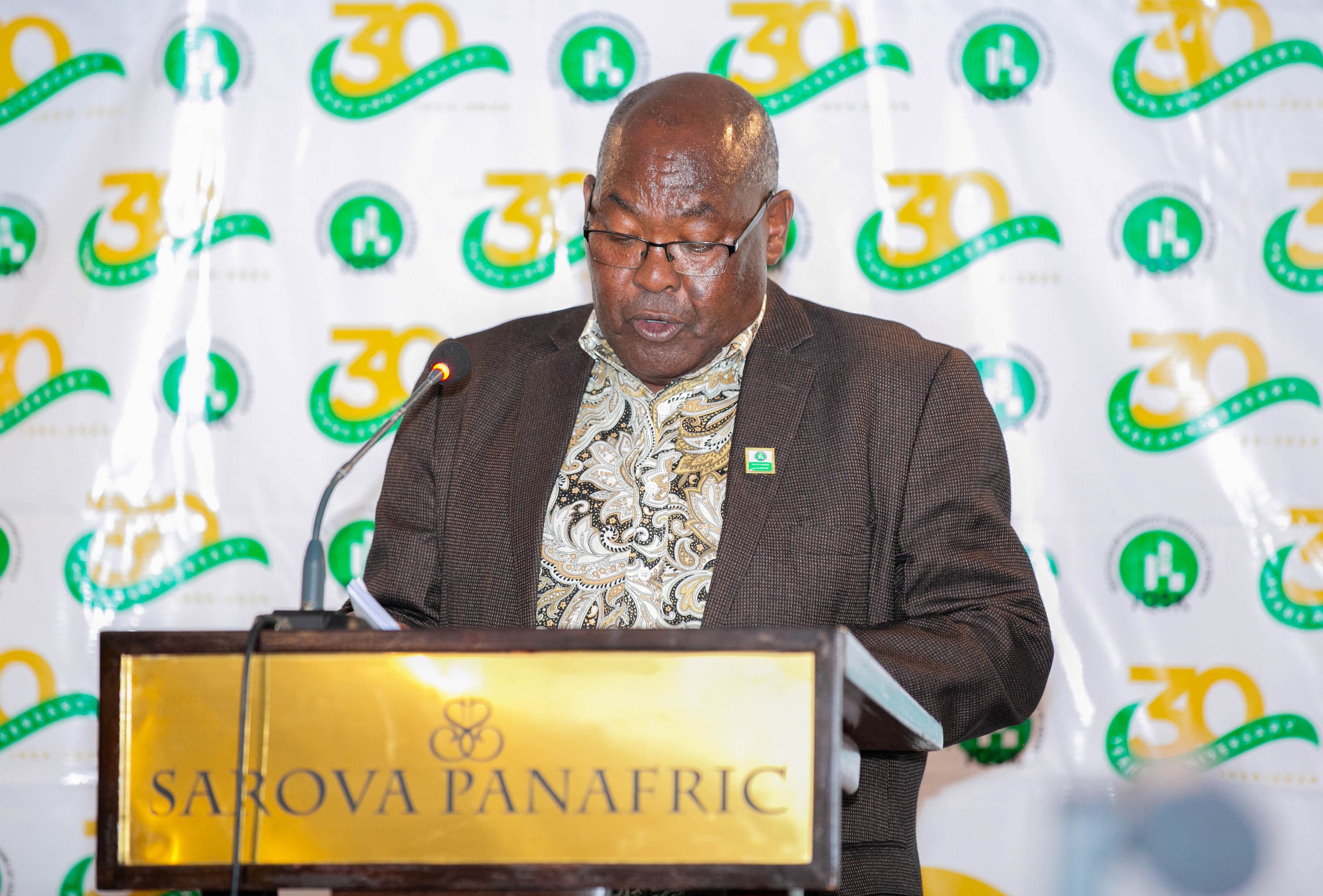



The 2024 Council Elections were administered by a five-member Independent Elections Commission appointed in accordance with By-Law 17. The Commission comprised Qs. Francis King’ori, FIQSK as Chairperson; Qs. Gladys Wahome, FIQSK as Vice Chairperson; Qs. Japheth Kibet; Qs. Portia Kabau; and Grad. Qs. Ernest Nyakundi.
The Commission was responsible for the full electoral cycle, including issuing the election notice, receiving and vetting nominations, handling nomination appeals, supervising the voters’ register, conducting voter sensitization, overseeing the voting process, tallying results, declaring winners, presenting the results to the AGM, and preparing the final elections report.
In carrying out this mandate, the Commission was guided by the core principles of free, fair, credible, transparent, impartial, efficient, accurate, and accountable elections.
The Road to Election Day
The election process began formally with the issuance of the election notice and call for nominations on 2 May 2024. The nominations window remained open for seven days and closed on 9 May 2024. The Commission then vetted the applications received, published a draft nominations list, provided an appeals window, and subsequently published the final list of successfully nominated candidates.
At the same time, the Commission prepared and published the draft voters’ register for verification by members. Members were encouraged to verify their details and settle any outstanding subscription arrears in order to be included in the final voters’ register. The final voters’ register was published on 24 May 2024.
The Commission also maintained active communication with members through SMS, WhatsApp, email, and social media. A voter sensitization webinar was held on 29 May 2024, during which members were taken through the voting process and the safeguards put in place to ensure the election was free, fair, and credible.
Nominations and Candidate Participation
The 2024 elections attracted considerable interest from members willing to serve the Institute. The Commission received 21 applications for nomination. Following the vetting process and determination of appeals, 20 candidates were included in the final nominations list.
One position, Vice President, was uncontested. Qs. Janet Chirchir was therefore elected unopposed. The remaining positions – President, Honorary Secretary, Honorary Treasurer, Honorary Registrar, Assistant Honorary Secretary, and Ordinary Council Member – proceeded to balloting.
The level of candidate participation reflected a healthy interest in the governance of the Institute and demonstrated that members continue to view service on Council as an important professional responsibility.
Technology, Trust and the Electoral System
One of the defining moments of the 2024 electoral process concerned the choice of electronic electoral system. The Commission had initially intended to use the IQSK electronic electoral system, which had been developed ahead of the 2022 IQSK Council Elections and used in that election cycle.
However, during the 2024 process, concerns were raised by a section of stakeholders regarding perceived conflict of interest, given that the system had been developed and administered by one of the Commissioners. In response, the Commission cancelled the planned mock elections and convened a stakeholders’ engagement forum on 24 May 2024 to deliberate on the concerns raised.
Following the engagement, the Commission resolved to procure an independent system provider in order to preserve stakeholder confidence in the transparency and neutrality of the process. After considering reputation, ability to deliver on short notice, cost, and after-sales support, the Commission selected C & R Group as the electronic poll management provider.
This episode became one of the most important lessons of the 2024 elections: electoral credibility is not only about whether a system works technically. It is also about whether members and candidates trust the independence, neutrality, security, and transparency of the system being used.
Voter Register, Sensitization and Turnout
The final voters’ register comprised 393 eligible members. These were full members of the Institute who were in good standing by the time the Commission finalized the register.
On Election Day, 349 ballots were cast out of the 393 eligible voters. This represented an approximate voter turnout of 88.8 percent. Only 44 eligible voters did not cast their ballots.
This strong turnout was one of the most positive outcomes of the election. It reflected the impact of the Commission’s communication and sensitization efforts, as well as the willingness of eligible members to participate in shaping the leadership of the Institute.
Key Election Facts
| Item | Detail |
| Election Day | 30 May 2024 |
| AGM and installation of Council | 31 May 2024 |
| Eligible voters in final register | 393 |
| Ballots cast | 349 |
| Ballots not cast | 44 |
| Approximate turnout | 88.8% |
| Nomination applications received | 21 |
| Candidates in final nominations list | 20 |
| Unopposed position | Vice President |
| Petitions or complaints on process and outcome | None reported |
Election Day: Voting and Support
Voting opened at 8:00 am and closed at 5:00 pm on 30 May 2024. Eligible voters received personalized voting links by SMS and email. The voting system allowed voters to access the ballot, select their preferred candidates, confirm their choices, and submit their vote electronically.
The system was configured to ensure that each voter could vote only once. For single-office positions, voters could select one candidate. For Ordinary Council Member positions, voters could select up to four candidates.
The Commission also provided support channels for members who experienced difficulties. Fourteen support requests were received on Election Day, mainly involving failure to receive voting links, non-responsive links, or USSD errors. These issues were resolved with the assistance of the service provider.
The election results were tallied electronically at 5:30 pm in the presence of candidates, outgoing Council members, and the IQSK Secretariat. The tallying meeting was chaired by the Commission Chairperson, Qs. Francis King’ori.
The 2024 – 2026 IQSK Council
Following the tallying and declaration of results, the IQSK Council for the 2024-2026 term was constituted as shown below.
| Position | Member |
| President | Qs. Mutinda Josphat Mutuku |
| Vice President | Qs. Janet Chirchir |
| Honorary Secretary | Qs. Rose Kotut |
| Honorary Registrar | Qs. Jordan Rabach Opiyo |
| Honorary Treasurer | Qs. Jasan W. Njoroge |
| Assistant Honorary Secretary | Qs. Cynthia Moira Mulaku |
| Council Member | Qs. Jacquelyne Legishion |
| Council Member | Qs. Claire Wangari Githiri |
| Council Member | Qs. Michael Chege Njoroge |
| Council Member | Qs. Bikeri Reuben Nyakundi |
| Immediate Past President | Qs. Jennifer Musyimi |










Key Lessons from the 2024 Elections
The 2024 elections produced several lessons that can strengthen future electoral cycles.
First, trust is as important as technology. Even where an electronic electoral system is technically capable, it must also command the confidence of candidates, voters, and stakeholders. Perceived conflict of interest can affect credibility, even where no actual misconduct has occurred.
Second, early preparation is critical. The Commission recommended that future Independent Elections Commissions and Elections Tribunals be appointed at the earliest possible time in accordance with By-Law 17, so that they have adequate time to plan, sensitize members, test systems, and resolve emerging issues.
Third, the clarity of nomination forms matters. The appeals received during the nomination process revealed that forms and guidance notes should clearly state the eligibility requirements for candidates, proposers, and seconders.
Fourth, member data must be treated with strict confidentiality. Concerns arose during the campaign period regarding access to member contacts. The Commission emphasized the need for candidates, custodians of member data, and the Institute to observe confidentiality and comply with data protection obligations.
Fifth, voter identification on the ballot can be improved. Some candidates raised concerns that the absence of candidate photographs on the ballot screen may have made it harder for voters to identify candidates. The Commission recommended that candidate photos be included in future electronic ballots or physical ballot papers.
Finally, while turnout among eligible voters was strong, the number of members in good standing remained a concern. Out of 923 full members, only 393 were in good standing and included in the final voters’ register. This points to the need for sustained efforts to improve subscription compliance and support the transition of eligible members into full membership.
Recommendations for Future Elections
The Commission made several recommendations aimed at improving future elections. These included avoiding the appointment of developers and administrators of the IQSK electronic electoral system as members of the Independent Elections Commission, in order to eliminate perceived conflict of interest.
The Commission also recommended strengthening and commercializing the IQSK electronic electoral system, providing a separate election budget during election years, improving nomination forms, including candidate photographs on ballot screens, and reviewing aspects of the legal framework governing election observers, appointment of commissioners, and the assumption of office by newly elected Council members.
Together, these recommendations are intended to improve credibility, operational readiness, transparency, and member confidence in future election cycles.
Conclusion
The 2024 IQSK Council Elections demonstrated that the Institute has come of age. Members participated actively, candidates offered themselves for service, the Commission responded to stakeholder concerns in real time, and the final outcome was accepted without petitions.
The elections also showed that institutional democracy is an ongoing process of learning and improvement. Each election cycle presents an opportunity to strengthen procedures, refine systems, enhance transparency, and deepen member trust.
As the 2024-2026 Council assumes its mandate, the lessons from the 2024 elections should serve as a foundation for even stronger electoral processes in the future. The task ahead is to preserve trust, improve systems, and continue building an Institute whose governance reflects the highest ideals of the quantity surveying profession.
Prepared by
The Independent Elections Commission